
Tip & Trick
Mastering uncommon keyboard symbols can drastically improve your typing speed and productivity. These 10 underused symbols starting with 'A'—from accent marks to mathematical operators—will transform how you work in documents, code, and communication.
Accented Letters: À É Ì Ò Ù

Need to type French résumé, Spanish café, or Italian caffè without fumbling? Accented letters like À É Ì Ò Ù aren’t just for foreign languages—they’re Unicode powerhouses in coding, data validation, and professional documents.
On most keyboards, these require Alt codes (e.g., Alt+0192 for À) or dead keys (hold ' then press A). In VS Code, type À directly via Ctrl+Shift+U, then paste U00C0. For LaTeX, use `\A for À—no manual copying needed. These accents also ensure proper sorting in databases (e.g., José vs. Jose).
Perfect for developers (Unicode strings), writers (foreign quotes), and global teams (localized docs). Master these, and you’ll never misplace an accent again. ✨
Angstrom Symbol (Å)
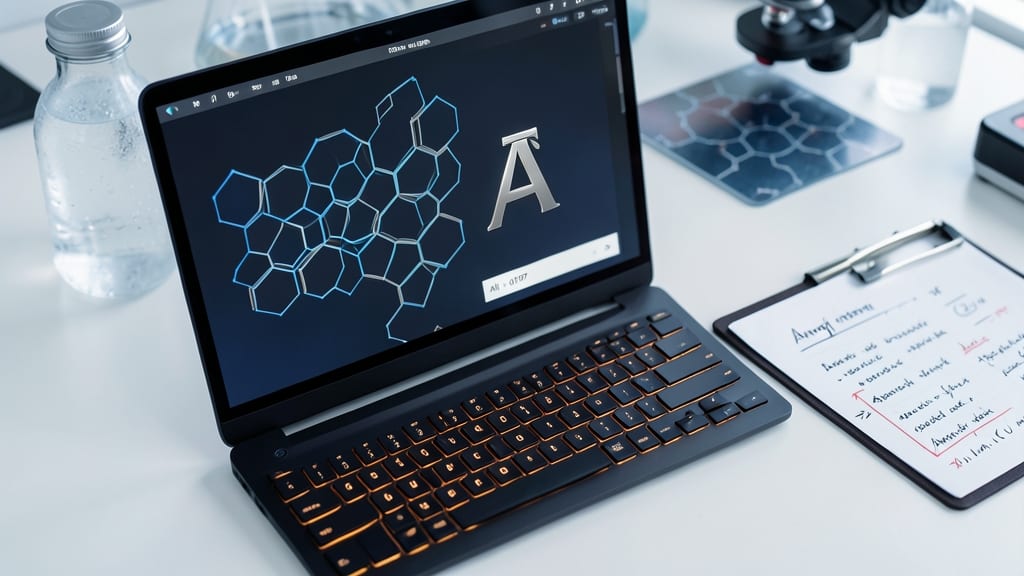
Ever wondered how scientists and engineers denote measurements at the atomic scale? The Angstrom symbol (Å) represents 0.1 nanometers, a critical unit for precision in fields like crystallography, spectroscopy, and molecular biology.
Typing it requires a Unicode shortcut: hold Alt and type 0197 on the numeric keypad, then release. This symbol appears in X-ray diffraction data, bond lengths, and semiconductor research—anywhere atomic-scale precision matters. Unlike its predecessors, the Ångström unit is named after Swedish physicist Anders Jonas Ångström, honoring his work on light spectra.
Perfect for researchers, material scientists, and technical writers, the Å symbol saves time when documenting microscopic measurements. Just remember: one Ångström equals 10⁻¹⁰ meters—smaller than a hydrogen atom’s radius! ✨
Alpha Symbol (α)

If you’ve ever stared at a physics textbook or coding formula and wondered about that tiny Greek letter α, you’re not alone. This symbol isn’t just decorative—it’s a powerhouse in equations, representing everything from angles in trigonometry to statistical significance in data science.
The Unicode character U+03B1 (α) is widely used in LaTeX documents, scientific papers, and even programming (like Python’s alpha parameter in statistical functions). Typing it is easy: hold Alt and type 0224 on a numeric keypad, or use Ctrl + Shift + U, then 03B1 and Enter. In LaTeX, simply type \alpha for instant rendering.
Perfect for students, engineers, and data analysts, α adds precision to your technical writing—whether you’re annotating a graph or defining a variable in code. ⚡
Ampersand (&)

The ampersand (&) isn’t just a throwback to old-school typography—it’s a powerhouse in modern tech. While you might recognize it as shorthand for "and," this symbol packs serious functionality across programming, markup languages, and design.
In HTML/XML, it’s a shortcut for <span>&</span> (e.g., John & Jane instead of John & Jane). Programmers use it as a logical AND operator in languages like C (if (a & b)) or shell scripting. Designers love its vintage charm—think logos for brands like Pepsi or BP—while typographers use it to add flair to headings and branding.
If you code, design, or just love typography, this symbol deserves a spot in your toolkit. Try it in your next project for a touch of elegance and efficiency! ✨
Arrow Symbols: ← → ↑ ↓

Need to direct attention in your UI, flowchart, or code? The arrow symbols (← → ↑ ↓) are your visual shortcuts for movement and logic. These aren’t just decorative—they’re functional workhorses in programming (e.g., loop comparisons) and design (e.g., navigation flows).
Each arrow has a Unicode counterpart: ← (U+2190) for left, → (U+2192) for right, ↑ (U+2191) for up, and ↓ (U+2193) for down. They’re widely supported across fonts and platforms, making them ideal for cross-language documentation and accessibility cues in apps. Pro tip: Use double arrows (⇄ ⇧) for bidirectional or multi-step actions.
Developers and designers rely on these for pseudocode, state machines, and interactive diagrams. Even gamers recognize them as standard controls—because clear direction matters everywhere. ✨
Approximation Symbol (≈)

When precision matters but exactness isn’t required, the ≈ (approximation symbol) becomes your secret weapon. Whether you're writing equations, analyzing data trends, or documenting engineering tolerances, this symbol elegantly communicates "close enough" without sacrificing clarity.
In Unicode (U+2248), it’s used in LaTeX as \approx, and in programming languages like Python to denote floating-point approximations. Engineers rely on it for dimensional tolerances (e.g., "≈10.2mm"), while physicists use it for asymptotic behavior in algorithms. Its clean, wavy design makes it instantly recognizable in technical manuscripts.
Perfect for data scientists comparing models, engineers specifying tolerances, or anyone writing mathematical proofs—this symbol saves words while keeping your work precise. ✨
Asterisk (*)
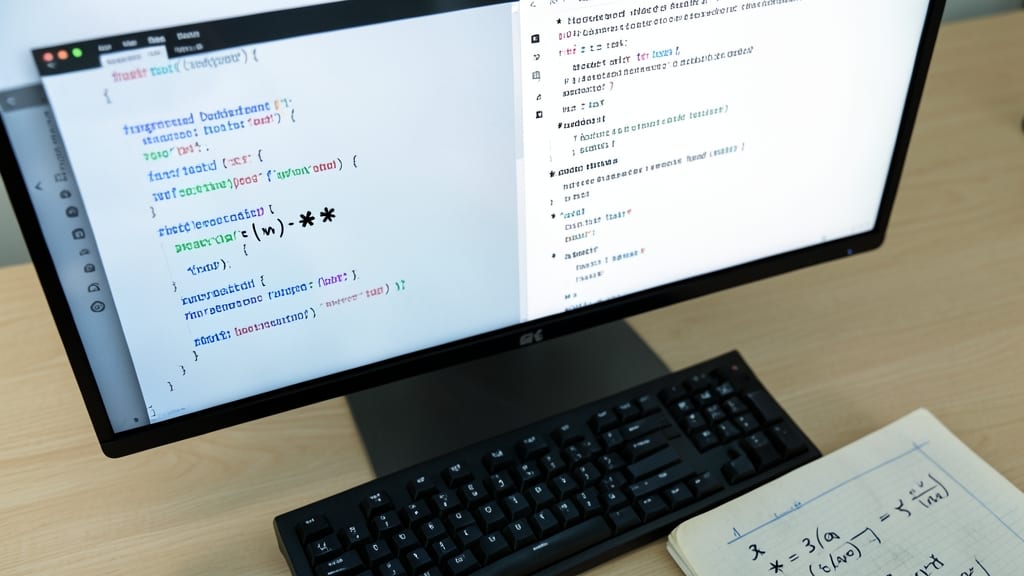
If you’ve ever skimmed through code, data tables, or creative writing, you’ve likely seen the asterisk () doing heavy lifting—yet most users only associate it with footnotes. This unassuming symbol is a powerhouse in regex patterns, Markdown formatting, and even mathematical notation, making it indispensable for developers, data analysts, and writers alike.
In regex, acts as a wildcard, matching zero or more repetitions of the preceding character (e.g., ab matches "b," "ab," "aab," etc.). For multiplication, it’s the standard operator in equations like 3 5 = 15, while in Markdown, it creates bold text (bold) or highlights code blocks. Even in data analysis, it often denotes missing values in datasets—like NA* in SQL queries.
Programmers and technical writers will find this symbol’s versatility a game-changer, especially when parsing logs, formatting documentation, or cleaning datasets. Give it a try in your next project—you’ll wonder how you ever lived without it! ⚡
At Symbol (@)
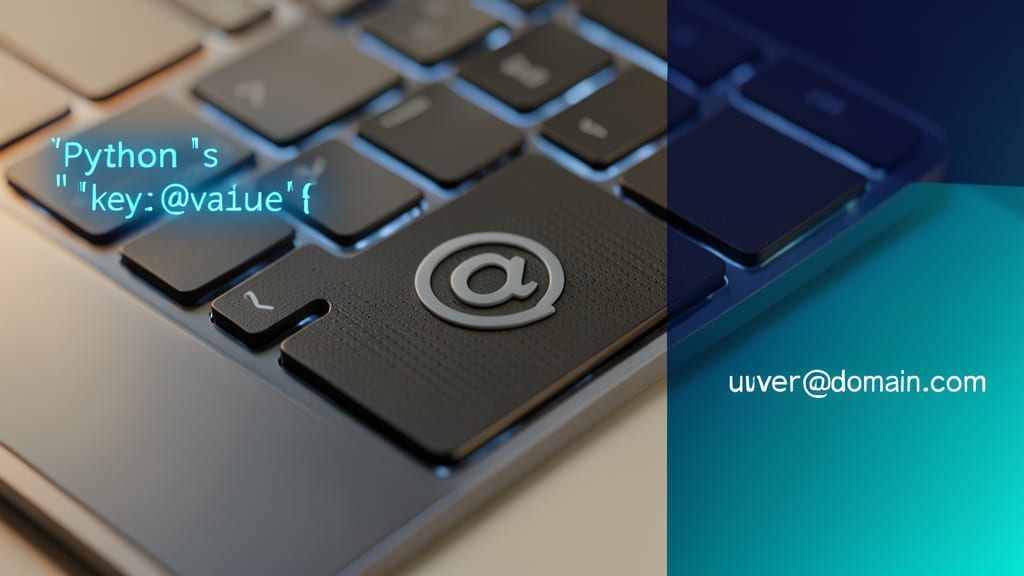
The @ symbol might scream "email" to most users, but its versatility extends far beyond inboxes. In programming, it’s a hash table key prefix in languages like Python and JavaScript, while social media handles and domain placeholders (e.g., user@domain) rely on it for structure.
On keyboards, it’s typically found Shift+2 on QWERTY layouts, but its role in regex patterns (e.g., @username) or API authentication (e.g., OAuth tokens) proves its technical depth. Developers also use it to denote scope resolution in languages like C++ or PHP.
Whether you’re coding, managing accounts, or typing URLs, the @ symbol’s dual-purpose utility makes it a power user’s shortcut. 💻
Alveolar Symbol (ʌ)
If you’ve ever transcribed speech or studied linguistics, you’ve likely encountered the alveolar symbol (ʌ)—the unsung hero of phonetic notation. Unlike its more common counterparts, this character represents the short "u" sound (as in "cup") in the International Phonetic Alphabet (IPA), bridging gaps in pronunciation guides, technical manuals, and even speech therapy tools.
Found in dictionaries like the Oxford English Dictionary and tools like Praat (a speech analysis software), the ʌ symbol is Unicode U+028C, meaning you can type it via Alt+0620 on Windows or Option+U+28C on Mac. Linguists and developers working with text-to-speech engines or automated transcription tools rely on it to ensure accuracy in speech synthesis.
Perfect for language researchers, speech therapists, and technical writers, this symbol ensures precision when documenting pronunciation—especially in languages like English, where vowel sounds can vary wildly. 💡
Angular Bracket (〈 〉)
If you’ve ever wondered why some documents or code use angular brackets (〈 〉) instead of standard brackets, they’re not just a stylistic choice—they’re a precision tool for structured data and typography.
In XML/HTML, they define tags like 〈div〉 or 〈p〉, while in LaTeX, they format mathematical expressions like 〈x, y〉. Unlike parentheses, their angled shape reduces ambiguity in nested structures, making them ideal for programming templates and markup languages. Typographers also favor them for clarity in nested lists or citations.
Developers working with web frameworks or academic writers using LaTeX will find these indispensable. Even casual users can appreciate their clean aesthetic in design projects. ✨